

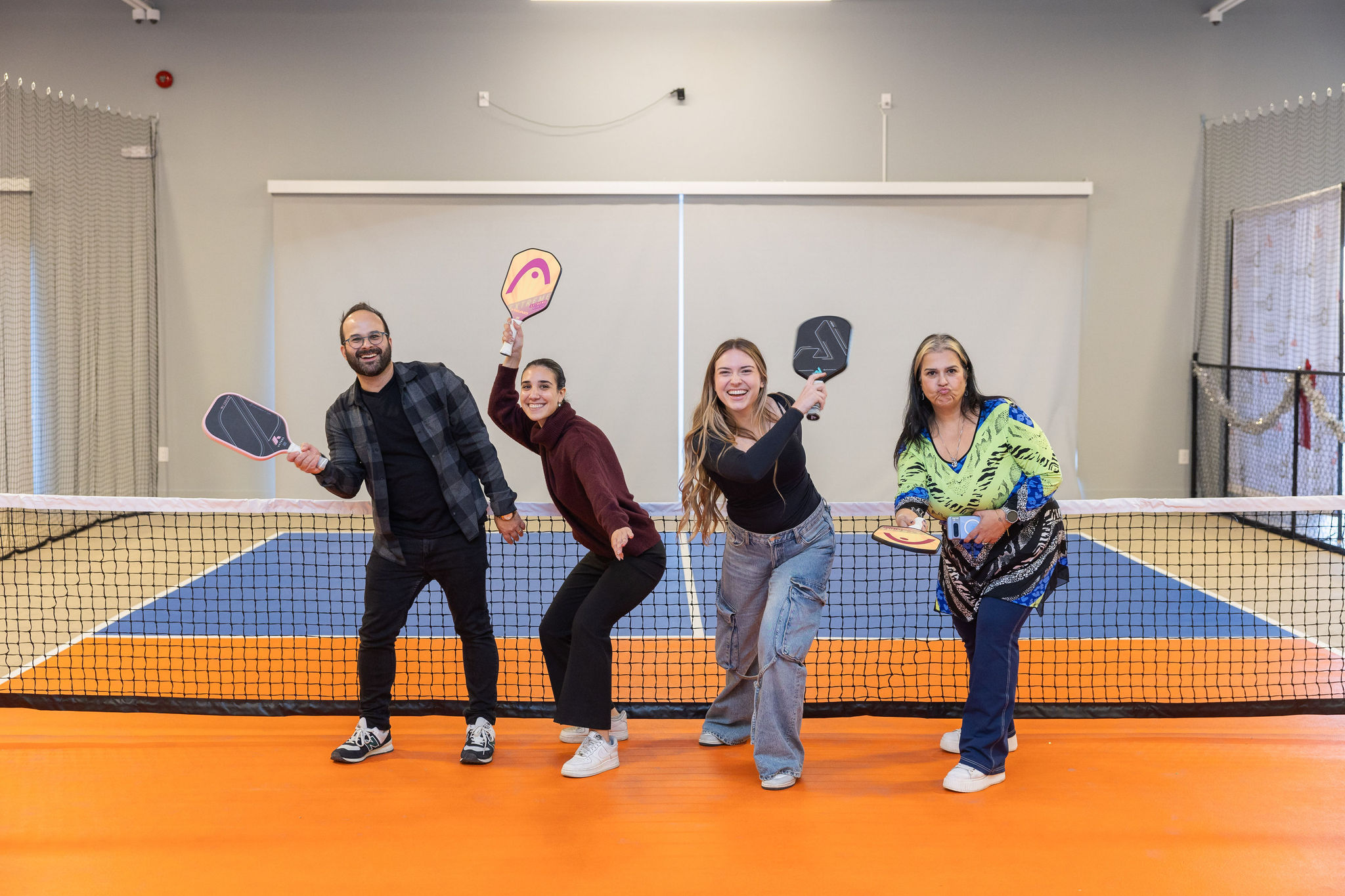
Pickleball might look simple at first glance: a small court, paddles instead of rackets, and a plastic ball, but if you’re new to the sport, it can feel confusing fast. When do you volley? Who serves next? Why is everyone talking about “the kitchen”?
If you’ve ever watched a game and thought, “I’d love to play, but I don’t really get how pickleball works,” you’re not alone. This guide is written specifically for you, the curious beginner or casual player who wants a clear, no-nonsense explanation.
By the end of this article, you’ll understand how pickleball works, including the rules, scoring system, and court layout, so you can step onto the court with confidence instead of questions.
What Is Pickleball and Why Is It So Popular?
Pickleball is a paddle sport that blends elements of tennis, badminton, and ping-pong. It’s played on a smaller court with a solid paddle and a lightweight, perforated plastic ball.
The reason pickleball has exploded in popularity is simple: it’s easy to learn, social, and accessible for almost any age or fitness level. You don’t need a powerful serve or years of training to have fun; many players rally within minutes of their first game.
Understanding how pickleball works is the key to enjoying it, so let’s start with the basics.
How Pickleball Works at a High Level
At its core, pickleball is about controlled rallies, smart positioning, and consistency. Games can be played as singles (one-on-one) or doubles (two-on-two), with doubles being the most common.
Here’s the basic flow:
- One team serves diagonally across the court
- The ball must bounce once on each side before volleys are allowed
- Players rally until a fault occurs
- Points are scored only by the serving team
- Games are typically played to 11 points, win by two
That’s the big picture. Now let’s break it down piece by piece.
Pickleball Court Layout Explained
Understanding the court makes everything else easier.
Court Size and Dimensions
A pickleball court is 20 feet wide by 44 feet long, the same size as a badminton court. This smaller size is one reason the sport feels less physically demanding than tennis.
The court is divided into:
- Right service court
- Left service court
- Non-volley zone (the kitchen)
The Non-Volley Zone (The Kitchen)
The non-volley zone extends 7 feet from the net on both sides. You cannot hit the ball out of the air (volley) while standing in this zone.
Why it exists:
- Prevents overpowering net smashes
- Encourages strategic play
- Levels the playing field for all skill levels
You can step into the kitchen to play a ball after it bounces; you just can’t volley from there.
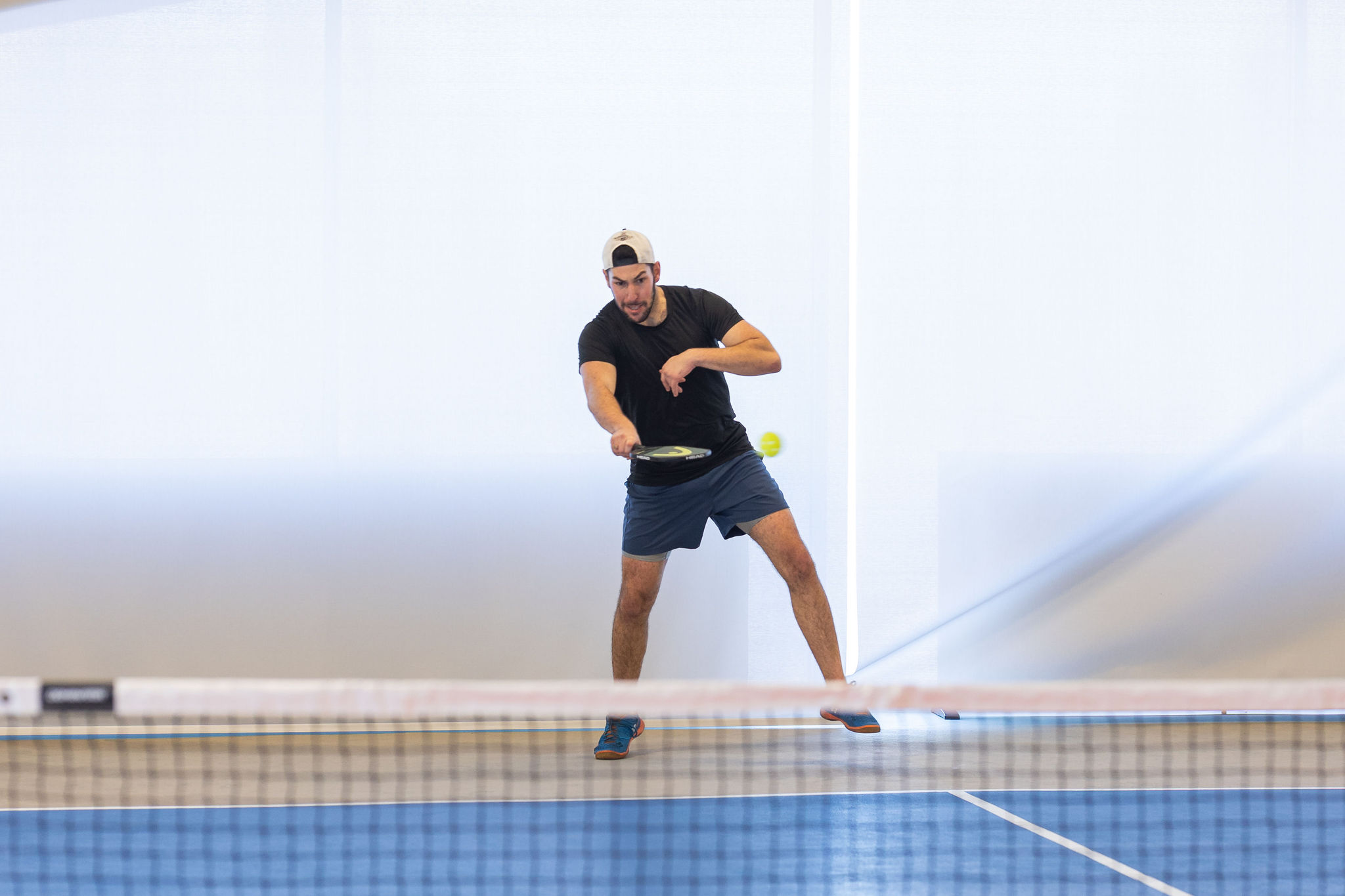
Pickleball Net Height
The net is slightly lower than a tennis net:
- 36 inches at the sidelines
- 34 inches in the middle
This lower height encourages longer rallies and makes the game more approachable for beginners.
Pickleball Equipment Basics
Before diving into rules and scoring, it helps to know the equipment involved.
Paddles
Pickleball paddles are solid (no strings) and made from materials like graphite, composite, or wood. They’re lighter and easier to control than tennis rackets.
The Ball
The pickleball is a plastic ball with holes. Indoor balls are softer with fewer holes, while outdoor balls are harder and designed to handle wind.
Pickleball Rules Explained Simply
Now let’s get into the rules that define how pickleball works.
The Serve
All serves must:
- Be underhand
- Contact the ball below the server’s navel
- Have the paddle head below the wrist at contact
- Land diagonally in the opposite service court
The serve must clear the non-volley zone and land beyond it.
Serving Order
In doubles:
- Each player on a team serves before the serve switches sides
- Except at the start of the game, when only one player serves
- Servers alternate sides after scoring a point
This system ensures fairness and keeps the game flowing.
The Two-Bounce Rule
This is one of the most important rules in pickleball.
After the serve:
- The receiving team must let the ball bounce
- The serving team must let the return bounce
- After those two bounces, players may volley or play off the bounce
This rule slows the game down early in the rally and prevents aggressive net rushing.
Volleys and Groundstrokes
- Volley: Hitting the ball before it bounces
- Groundstroke: Hitting the ball after it bounces
Volleys are not allowed in the kitchen, but groundstrokes are. Understanding this distinction prevents many beginner mistakes.
Common Pickleball Faults
A fault ends the rally and may result in a point or loss of serve.
Common faults include:
- Hitting the ball out of bounds
- Volleying in the non-volley zone
- Violating the two-bounce rule
- Serving illegally
- Touching the net during play
Knowing these faults helps you avoid losing points unnecessarily.
How Pickleball Scoring Works
Scoring is often where beginners get confused, but it’s simpler than it looks.
Traditional Pickleball Scoring
- Only the serving team can score points
- Games are typically played to 11 points
- You must win by 2 points
In doubles, the score is called as three numbers:
- Server’s score
- Receiver’s score
- Server number (1 or 2)
Example: “5–3–2”
Why Only the Serving Team Scores
This rule encourages longer rallies and strategic serving rather than all-out aggression. It also keeps games competitive, even when skill levels differ.
Singles vs Doubles Scoring
In singles, scoring is simpler:
- Only two numbers are called
- The server’s position is determined by their score (even = right side, odd = left side)
This makes singles pickleball easier to track for new players.
Rally Scoring (Alternative Format)
Some leagues and recreational games use rally scoring, where a point is awarded on every rally regardless of who serves.
While not standard, rally scoring:
- Speeds up games
- Simplifies scorekeeping
- Is popular in casual play
Always clarify which scoring system is being used before a match.
How a Pickleball Game Ends
A game ends when:
- One team reaches 11 points
- They are ahead by at least 2 points
Tournament games may go to 15 or 21 points, but the same “win by two” rule applies.
How Pickleball Strategy Fits Into the Rules
Once you understand the rules, strategy starts to make sense.
The kitchen rule encourages:
- Soft shots (dinks)
- Patience at the net
- Controlled placement over power
The two-bounce rule creates:
- Fairer serves
- More balanced rallies
- Longer points
The rules aren’t there to slow the game; they’re there to make it more engaging.
What Beginners Should Focus On First
If you’re new and want to understand how pickleball works without feeling overwhelmed, focus on:
- Getting the serve in
- Letting the first two shots bounce
- Avoiding kitchen violations
- Keeping the ball in play
You don’t need fancy shots to enjoy the game. Consistency wins more points than power at beginner and intermediate levels.
Why Understanding the Basics Makes Pickleball More Fun
Many frustrations in pickleball come from confusion, not difficulty. When you understand the rules, scoring, and court layout, the game becomes smoother, more social, and far more enjoyable.
Instead of stopping play to ask questions, you’ll:
- Move confidently on the court
- Anticipate the flow of rallies
- Focus on improving your skills
Final Thoughts: Pickleball Is Simple Once You See the Big Picture
Pickleball may seem confusing at first, but once you break it down, the sport is refreshingly straightforward. The rules encourage fair play, the scoring rewards consistency, and the court layout creates exciting, strategic rallies.
Now that you know how pickleball works; rules, scoring, and court layout explained, you’re ready to step onto the court with confidence. Grab a paddle, find a court, and enjoy one of the most beginner-friendly and rewarding sports around.